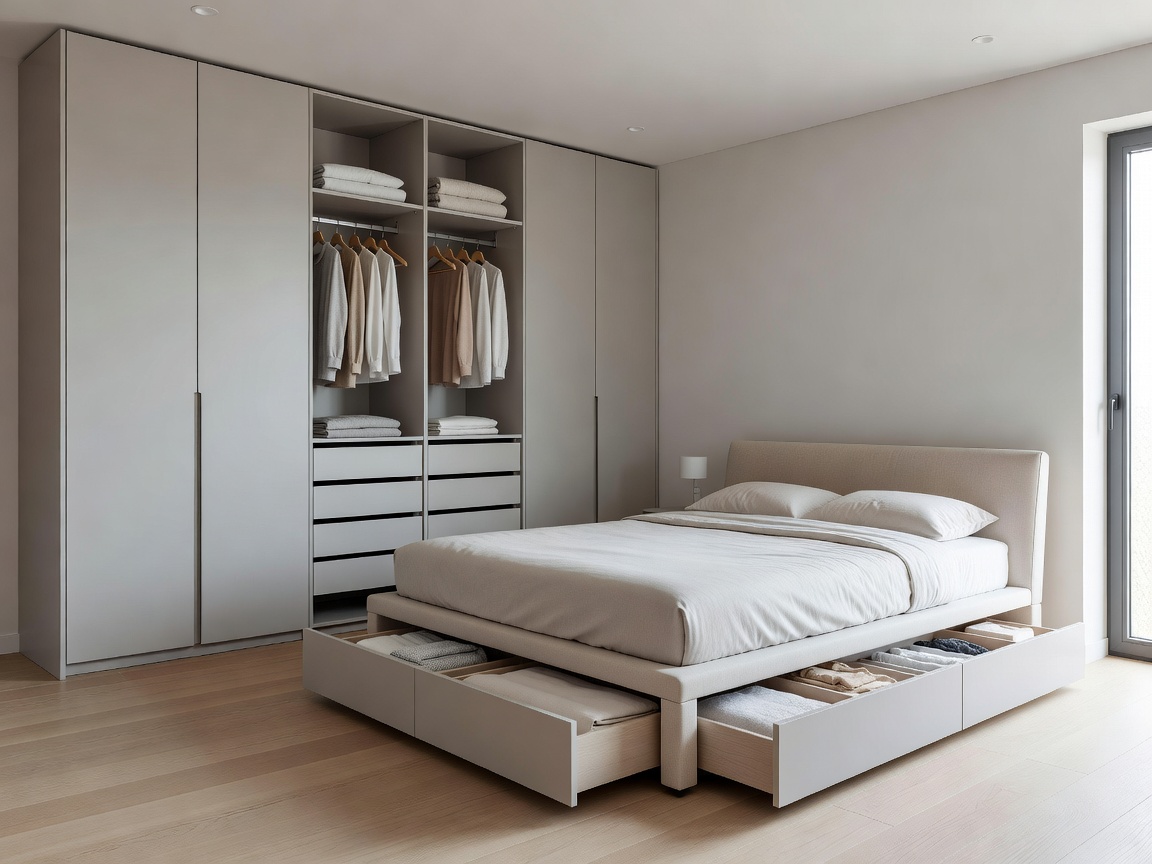
The bedroom should serve as a retreat—a calm environment dedicated to rest and recovery. However, it is also expected to house an ever-growing inventory of clothing, bedding, accessories, and personal items. Successfully balancing these competing demands requires thoughtful, integrated storage solutions rather than a chaotic assembly of mismatched boxes and bins.
Built-in vs. Freestanding Wardrobes
The primary battleground for bedroom storage is the wardrobe. The choice between built-in and freestanding units fundamentally alters the room's architecture.
Built-in Cabinetry
Built-in wardrobes utilize space with absolute efficiency, stretching from floor to ceiling and wall to wall. They can be tailored to navigate awkward alcoves or sloping ceilings, transforming dead space into usable volume. Because they blend into the architecture of the room, they create a streamlined, minimalist aesthetic. The downside is permanence; they cannot move with you, and their installation requires professional fitting.
Freestanding Wardrobes
Freestanding units offer flexibility and can serve as striking visual centerpieces. Whether it is an antique armoire or a sleek mid-century modern design, these pieces bring character into the room. They are transportable, making them ideal for renters or those who frequently redesign their spaces. However, they rarely utilize the full vertical height of a room, leaving space above that can become a magnet for dust and clutter.
Under-Bed Storage: The Hidden Volume
The footprint of a standard double or king-size bed represents a massive amount of floor space. Leaving this area empty is a missed opportunity in any home where square footage is at a premium.
- Divan Bases with Drawers: A classic solution offering easy-access lateral drawers built directly into the base of the bed. Excellent for everyday items.
- Ottoman Beds: These beds feature a hydraulic or gas-lift mechanism that raises the entire mattress, revealing the entire volume beneath the bed. This is the ultimate solution for bulky items like winter duvets, suitcases, or ski gear.
- Platform Beds with Cubbies: A more modern aesthetic where the mattress rests on a raised wooden platform integrated with open shelving or deep pull-out baskets.
Evaluating Storage Methods
| Solution Type | Best Used For | Space Efficiency |
|---|---|---|
| Ottoman Lift Bed | Bulky, seasonal items (duvets, luggage) | Exceptional (utilizes full bed footprint) |
| Floor-to-Ceiling Wardrobes | Everyday clothing, shoes, hanging garments | High (capitalizes on vertical space) |
| Freestanding Dresser | Folded clothes, underwear, accessories | Moderate (requires clearance for drawers) |
Secondary Storage Tactics
Beyond the primary wardrobe and bed, secondary pieces can dramatically reduce clutter. Bedside tables should feature at least two drawers rather than a single open shelf, hiding cables and reading materials from plain view. A blanket box or storage bench positioned at the foot of the bed provides an elegant transition space while hiding extra linens.
Ultimately, successful bedroom storage is about compartmentalization. By assigning specific zones for specific categories of items, you reduce visual noise, creating an environment that actively promotes relaxation.