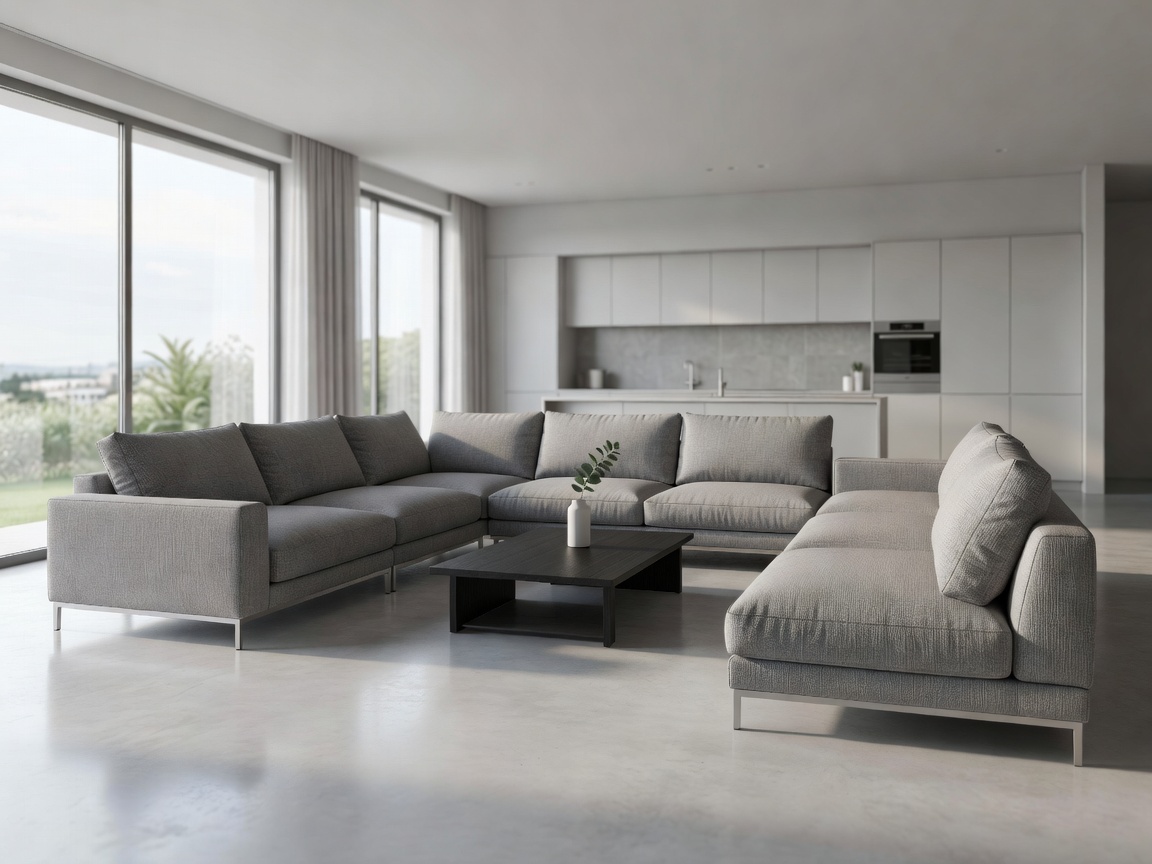
The traditional two- or three-seater sofa dictates the layout of a room. It is a fixed, monolithic block around which all other furniture must negotiate. In contrast, modular sofa systems break the seating arrangement into independent sections—corners, armless chairs, chaises, and ottomans—that can be configured, separated, and recombined at will. This adaptability has made modular seating a cornerstone of modern interior design.
The Anatomy of a Modular System
A true modular system is composed of several basic building blocks. By locking these pieces together using discreet metal brackets or heavy-duty clips beneath the frame, you can create vast U-shapes, intimate L-shaped sectionals, or even separate them into distinct conversational groupings.
Key Components
The Corner Unit: Essential for changing the direction of the seating. Most systems utilize symmetrical corner pieces that can serve as either left or right turns.
The Armless Module: The core filler piece that extends the length of the sofa. These can also be used independently as slipper chairs in a pinch.
The Chaise / Ottoman: Chaises provide a deep lounging area and typically terminate a sequence. Ottomans offer incredible versatility, serving as a footrest, a makeshift coffee table (when paired with a tray), or a floating seat that can attach to any armless section to create an impromptu chaise.
Fabric and Durability Considerations
Because modular sections can be rearranged, they are subjected to handling and friction on all sides. Therefore, the upholstery must be exceptionally durable. Performance fabrics, which are tightly woven and treated to resist stains and liquid penetration, are highly recommended for modular units.
- Performance Synthetics: Polyester blends and acrylics offer high resistance to fading and abrasion. They are ideal for high-traffic environments or homes with pets.
- Natural Fibres: Linen and cotton offer a breathable, luxurious feel but require more careful maintenance. They can wrinkle easily, presenting a more relaxed, "lived-in" aesthetic.
- Leather: Top-grain leather provides unmatched durability and ages beautifully, developing a rich patina over time. It is, however, a more significant initial investment.
Pros and Cons of Modular Seating
| Advantages | Disadvantages |
|---|---|
| Highly customizable to fit awkward or uniquely shaped rooms. | Multiple modules can cost more than a single, fixed sofa of the same size. |
| Easy to transport and maneuver through narrow doorways and stairwells. | Seams between modules can sometimes separate if locking mechanisms are poor. |
| Individual pieces can be replaced if damaged, extending the lifespan of the set. | Can appear blocky or overly bulky in very small spaces. |
Construction Quality
The structural integrity of a modular sofa relies heavily on the frame. Kiln-dried hardwood (such as ash or beech) or engineered multi-ply plywood prevents warping over time. The suspension system should utilize sinuous springs or high-quality webbing to prevent the seat from sagging.
When selecting a modular system, physically inspect the linking mechanisms. They should be robust metal brackets (often crocodile clips or U-shaped drop-in brackets) rather than cheap plastics that can snap under lateral pressure. A well-built modular sofa will feel like a single cohesive unit once connected, offering the permanence of a traditional sofa with the secret superpower of total flexibility.